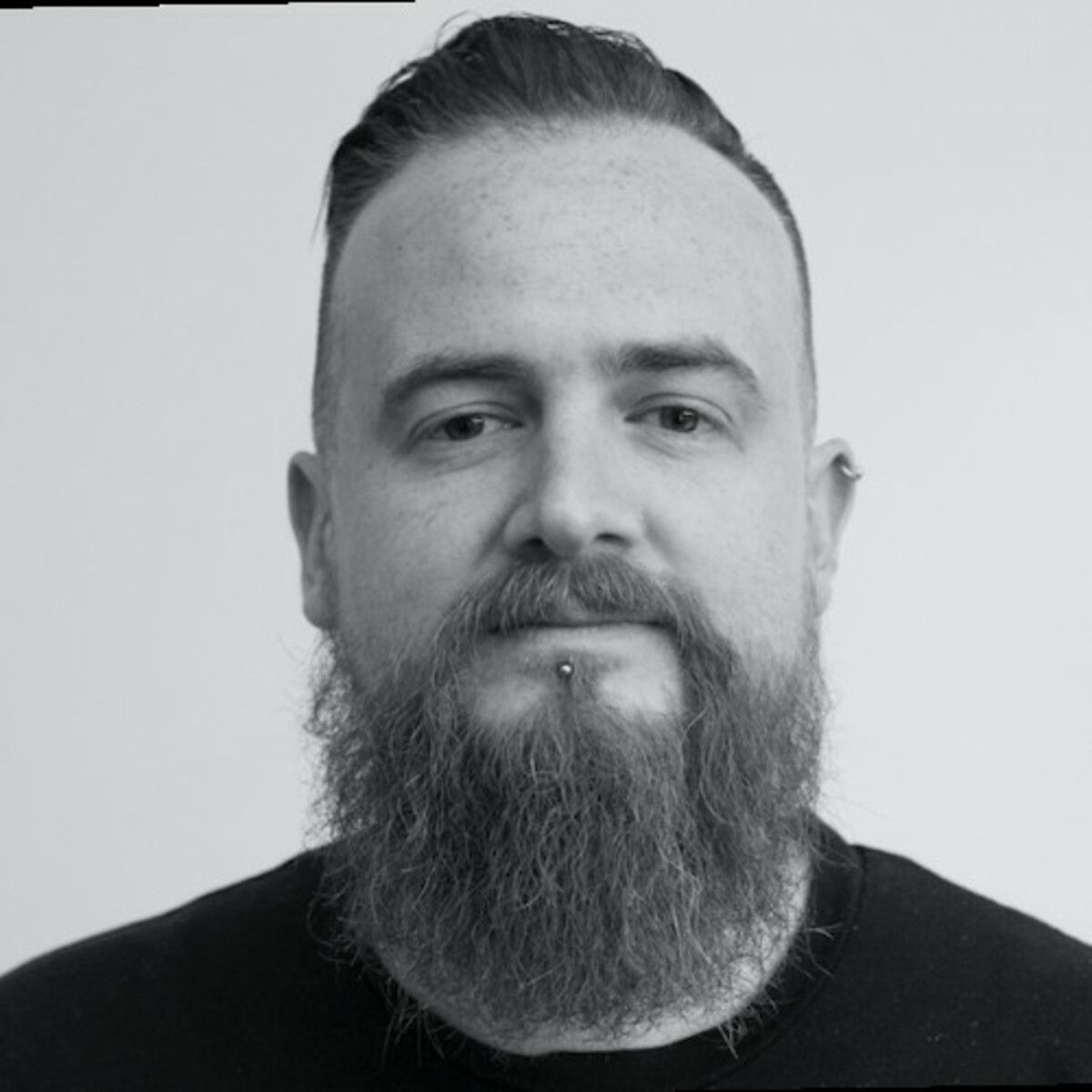
A couple of years ago I met Channa up at the Cairns Crocs when he was working on the UberEats brand and we had some great chats on the ups and downs of the industry, but one topic that really struck a chord was ‘shepherding the work’. A simplistic way of viewing the agency/client relationship is that one side comes up with and presents the work and the other side approves it. But, as we all know, getting a great idea out the door involves a hell of a lot more work beyond hearing the words ‘concept approved’.
In this game all it takes is one comment, one stakeholder, one piece of research to sink a ship. So one of the most valuable abilities is to keep the work alive long enough to see it live. Which is the main thread of this DTSACMO with Channa Goonasekara.

Channa Goonasekara is a marketing leader known for championing bold creative work at brands including McDonald’s, Uber Eats and Netflix. He believes the role of a modern marketer isn’t just to approve ideas, but to protect them.
Marketing has never been more sophisticated. Yet a lot of advertising has never been more forgettable.
We’ve never had more data, more diagnostics, more frameworks or more “best practice” guides. And yet a huge amount of advertising still blends into the background.
It’s not intelligence we’re lacking in, but conviction.
Great creative work rarely fails because of bad ideas. It fails because organisations are uncomfortable with creativity. Committees smooth the edges off it. Research over-analyses it. And eventually the original idea gets run through the corporate car wash until it’s unrecognisable.
That’s why I’ve come to believe something very simple.
Good creative isn’t a formula. It’s a feeling.
Was there a ‘penny drop’ moment in your career that made you embrace creativity?
I don’t think I ever had a single penny-drop moment. I just found myself naturally drawn to creative thinking early on.
I was one of those kids, basically raised by TV. Movies, theatre, anything with a story. I was constantly absorbing how ideas, characters and worlds were built. At the time it just felt like entertainment. Looking back, it was probably the best creative training I could have had.
It gave me a creative language. When I’m in a room with agency creatives and reference a specific tone, trope, or storytelling device, they usually know exactly what I mean. It’s a kind of shorthand. And I think that’s where a lot of client-agency relationships fall apart. If you can’t speak the language of creativity, it’s very hard to protect it.
My first marketing job was at a small family-owned food retail business. There were no dashboards, attribution models or brand trackers. Success was measured in the simplest way possible: did sales go up? The upside of that simplicity was that it gave me permission to practise the craft. I learned how to write strong briefs and debriefs that sold a vision to creative partners, how to influence internal stakeholders and rally people behind ideas, and how to keep shaping work until it genuinely connected with customers. At a small scale, I also experienced something every marketer should see early in their career: the moment when something you helped create brings real delight to the people it’s made for.
That environment taught me something early that I still believe today: when an idea genuinely cuts through with people, the commercial impact follows.
Then I moved to McDonald’s.
The scale shift was immediate. Suddenly I was working on a brand where millions of Australians interact with it every day, backed by enormous media reach and real commercial pressure. What that environment showed me very quickly was that the same principle still held true, just amplified. When creative work genuinely cuts through, the commercial impact is disproportionate.
It also changed how I thought about evaluating creative at that scale.
One lesson from a training session there stuck with me. Before you start analysing an idea against a checklist, think about it as a consumer. If you don’t like it, there’s a good chance someone else won’t either. And if you love it, there’s a good chance others will too.
That idea has shaped how I’ve approached creative evaluation ever since.
We’re deep in the era of big data. How important is gut feel?
Data is incredibly useful. But it’s often misunderstood.
Data is brilliant at explaining the past. Creativity is what builds the future.
If data alone gave us the answers, every brand would eventually converge on the same ideas. The same formats. The same messaging. And that’s exactly what we’re seeing across a lot of marketing today. A sea of competent, optimised work that nobody actually remembers.
Creative testing is probably the most controversial example of this. I’ve worked with leaders who treat diagnostics like a crystal ball, as if ten people in a focus group can definitively determine whether an idea will succeed in the real world.
In many cases, it’s less about finding the right answer and more about protecting the decision-maker. If something fails, the blame can be outsourced to the research. It’s a lot safer than backing your own instinct.
The reality is we’re asking people to evaluate advertising in an environment that bears almost no resemblance to how they actually experience it. These tools can be helpful signals, but they should be a compass, not a steering wheel.
One of the best examples of this for me was the Uber Eats Grey Wiggle campaign.
We were developing a new chapter of the “Tonight I’ll Be Eating…” platform, made famous by the 2019 campaign featuring Kim Kardashian and Magda Szubanski. The idea behind it was simple: make food delivery salient at dinner time by turning it into entertainment.
The creative device was a cultural collision. Take two worlds that don’t belong and bring them together in a way that feels instantly entertaining.
To reach young parent families, the creative team at the agency brought in a concept called the Grey Wiggle. The idea was brilliantly simple. Take the colourful world of The Wiggles and insert a grumpy outsider in a grey skivvy, someone like Simon Cowell. Instant contrast. Instant comedy.
I loved the idea immediately. It was exactly the kind of cultural collision that made the platform work.
Unfortunately, not everyone felt the same way. A senior stakeholder dismissed it almost immediately. Within seconds the room shifted. Other senior leaders who had previously supported the idea quickly aligned with the criticism. The idea was effectively dead.
Not everyone backed away though. My manager at the time, a rare kind of marketing leader who trusted the people closest to the work, backed me and gave me the space to keep finding a way through.
That experience reinforced something for me: great creative work can’t survive on belief alone, it needs backing.
Three months later we were still swirling. There were strong ideas on the table, but nothing was making it through to production. Every new idea got pulled into the corporate car wash and never quite made it out.
Eventually I realised that if the organisation trusted research more than instinct, the only way forward was to play the game. It wasn’t without risk. If it didn’t go our way, we’d be back at square one. But at that point, we weren’t making anything anyway.
So we ran consumer testing and, almost as a benchmark, included the Wiggles concept.
Unsurprisingly, it came out on top in the research.
Suddenly the same stakeholders who had dismissed it were comfortable proceeding. The campaign went into production and became Uber Eats’ most successful campaign globally that year.
The lesson for me wasn’t that research saved the idea. It was that great creative needs someone willing to fight for it long enough to survive the process.
How do you think about risk when assessing creative work?
People often talk about risk in marketing as if it only exists in bold ideas.
In reality the biggest risk is spending millions on something nobody notices.
Most “safe” work is safe precisely because it’s ignorable. It blends into the background. It doesn’t upset anyone, but it doesn’t move culture or business outcomes either.
Some of the work I’m proudest of happened because we leaned into instinct rather than overthinking the risk.
As budgets tightened in Australia at Uber Eats, we could no longer rely on the same scale of celebrity deals we’d previously used. Instead of abandoning celebrity entirely, I pushed us to think differently about how we could borrow cultural equity.
That’s how we ended up working with Tom Felton, best known for his role as Draco Malfoy in the Harry Potter franchise, and Nicola Coughlan, known for her role as Penelope Featherington in Bridgerton. Both brought enormous cultural associations through globally loved properties, allowing us to tap into existing fandoms rather than pay for fame in isolation. The campaigns travelled further than we expected. Ultimately, we weren’t chasing famous people. We were chasing fame for the work.
Another example, outside of that platform, was an Uber One campaign featuring Michelle Williams from Destiny’s Child. Some stakeholders initially dismissed the idea on the basis that Destiny’s Child hadn’t had a hit in years.
That’s when my long-time creative collaborator and head of communications at the time, Nick Vindin, reframed the conversation perfectly: “We don’t need Beyoncé. We just need Beyoncé adjacency.”
It was a simple but powerful unlock. Destiny’s Child carries enormous cultural equity, and by extension you’re sitting right next to one of the biggest artists on the planet. The campaign went ahead and travelled widely, capturing attention across multiple markets.
That thinking evolved even further in the next brief for the “Get Almost Almost Anything” platform.
I went in with three clear principles. First, we needed to introduce a new creative device into the platform so it felt fresh. I pushed music as a direction, something that would feel starkly different to what we’d done before.
Second, we’d seen the power of fandom. When you tap into the right audience, they do the amplification for you.
And third, it had to stay true to the tone we’d built for Uber Eats. Celebrities making self-deprecating jokes about themselves, grounded in a real cultural insight.
I briefed that into the agency and we started exploring the space.
The idea came from a pretty unglamorous place. I was lying in a dentist chair when If I Could Turn Back Time came on the radio. It immediately sparked a thought: if Cher could order anything on Uber Eats, she’d order a time machine.
I immediately texted it to the creative team at the agency and sanity-checked it with Nick, who summed it up perfectly: “There’s no bigger syllable in entertainment than Cher. If we pull it off, it’s a new high watermark for the brand. The summit of the fame game.”
The team ran with it and made it better, landing on the idea of Cher trying to return to the 80s, only to end up in the 1680s and being accused of being a witch for looking both young and old at the same time. It’s what happens when you’re working with people who share the same creative instincts and push the idea further.
Moments like that reinforced something I’ve learned over time. The job of a modern marketer isn’t just to approve work. It’s to win others over and create the conditions where great work survives. Because in most organisations, great ideas don’t fail in the market. They fail in the meeting room.
Large organisations naturally default to committees and consensus. It feels safer. But committees rarely create anything interesting. They smooth the edges off ideas until they’re impossible to object to and impossible to remember.
That’s why the most important thing you can do as a marketer is find the creative partners you genuinely trust and hold onto them. The ones who share your ambition for the work. People you can challenge, riff with and problem-solve alongside.
The best work I’ve been part of has always come from strong partnerships with creative teams. Speaking the same language, trusting each other’s instincts and fighting for the work together. That’s everything.
And in an industry increasingly filled with safe, optimised work, creativity remains one of the last true unfair advantages.
We talk a lot about ‘big, bold ideas’, but the real challenge is making sure they survive long enough to exist.
Amen.
